
Fintech firm One97 Communications, which owns the Paytm brand, on Wednesday said its loss in the fourth quarter of the financial year 2023-24 has widened to Rs 550 crore following the ban imposed by the RBI on transactions related to its payments bank. The company had posted a loss of Rs 167.5 crore in the same period a year ago, the company said in a regulatory filing. "Our fourth quarter FY24 results were impacted by temporary disruption on account of UPI transition etc. and permanent disruption because of the PPBL embargo.
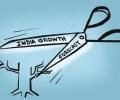
The International Monetary Fund (IMF) on Tuesday lowered India's economic growth projection for the current fiscal to 5.9 per cent from 6.1 per cent earlier. Yet India will continue to be the fastest-growing economy in the world. In its annual World Economic Outlook, IMF also lowered the forecast for 2024-25 fiscal (April 2024 to March 2025) to 6.3 per cent from the 6.8 per cent it had predicted in January this year. The growth rate of 5.9 per cent in the 2023-24 fiscal compares to an estimated 6.8 per cent in the previous year.

Concerns have been raised over Marico's exposure to Bangladesh in the wake of turmoil in that country. However, the management reiterated expectations of growing domestic business at double digits and maintaining international growth. Marico scaled up its food business by 4 times between FY20-24 and aims to double it again in the next three financial years.

Logistics major Delhivery has had promising Q2FY25 results. The Q2FY25 consolidated revenue was Rs 2,190 crore (up 0.8 per cent quarter-on-quarter or Q-o-Q and 12.8 per cent year-on-year or Y-o-Y). Express parcel revenue was Rs 1,300 crore, (up 1.7 per cent Q-o-Q/7.3 per cent Y-o-Y) alongside better yield (+5 per cent Y-o-Y) in the segment.

From its lows over the past month, the stock of footwear major Campus Activewear gained 13 per cent to Rs 280.4 a share. The gains came on the back of better than expected operating profit margins in Q4, reduction of debt and expectations of market share improvement. The company expects volume growth, which has thus far missed expectations, to recover going ahead on the back of multiple triggers.

Haryana has done well in terms of economic growth over the last couple of decades. For it to continue to lead the growth ladder, the new government has to work hard on multiple dimensions, recommend Shishir Gupta and Rishita Sachdeva.

India's economic growth slowed to a 15-month low of 6.7 per cent in April-June 2024-25, mainly due to poor performance of the agriculture and services sectors, government data showed on Friday. The gross domestic product (GDP) expanded by 8.2 per cent in the April-June quarter of 2022-23. India, however, remained the fastest-growing major economy, as China posted a 4.7 per cent growth in April-June 2024.

Auto manufacturers have focused on launching CNG variants of their popular models to meet consumer demand for vehicles with lower running costs.

Mumbai-based developers Macrotech Developers (Lodha) and Oberoi Realty have emerged as top gainers among largecap realty stocks over the past month, with gains ranging from 29 per cent to 33 per cent. Strong ongoing sales trends in Mumbai's core market, record bookings in the January-March quarter, and healthy guidance for 2024-25 (FY25) have propelled these companies, which derive the majority of their revenues from India's financial capital.

The stock of online classified major Info Edge (India) was up over 6 per cent on Friday on expectations of demand improvement for Indian IT companies. Strong revenue growth prospects for each of its online verticals - including recruitment, matrimony, real estate, education, and upside from its holdings in companies such as Zomato - had prompted Goldman Sachs to upgrade the stock. Info Edge's standalone revenue grew 10.6 per cent year on year (Y-o-Y) in Q2FY25, beating consensus. 99acres (+16.9 per cent Y-o-Y) and Jeevansathi (+33 per cent Y-o-Y) were drivers of growth while recruitment grew 8.5 per cent Y-o-Y.

Coal India Limited's (CIL) October-December quarter of financial year 2023-24 (Q3FY24) results have beaten the Street's estimates. Revenue rose 3 per cent year-on-year (Y-o-Y) to Rs 36,200 crore, led by higher volumes and better realisation from Fuel-Supply Agreement (FSA) coal. The blended average selling price (ASP) was down 6 per cent Y-o-Y to Rs 1,727 per tonne, and the FSA ASP was up 3 per cent Y-o-Y to Rs 1,532 per tonne.

Bengaluru-headquartered electric two-wheeler manufacturer Ather Energy is all set to file its draft red herring prospectus within the second week of September to the Securities Exchange Board of India (Sebi) for its maiden initial public offering (IPO), in which it is expected to raise over $450 million. On Tuesday, the fourth-largest electric two-wheeler maker in the country by volume raised Rs 600 crore from its existing investor, the National Investment and Infrastructure Fund (NIIF), catapulting itself into a unicorn with a valuation of $1.3 billion.

Alloting more funds for MNREGA and PM-KISAN could wipe out the entire additional money that the Centre may have for FY25.

Recovering from an order dry-up and change in market conditions, Gurgaon-based Rites is looking to bid aggressively in global export and consultancy tenders and run with a volume-led approach, its chairman and managing director (CMD) Rahul Mithal said. Rites is a railway consultancy public sector undertaking (PSU) under the aegis of the Ministry of Railways. "We started the year with two huge challenges - the export order book, where no new orders had happened, and the opening up of Indian Railways quality assurance works to four players.

Tata Motors reported a consolidated net profit of Rs 17,483 crore (adjusted for exceptional gains and losses) for Q4FY24, surpassing TCS' consolidated net earnings of Rs 12,434 crore. For the automotive major, this marked a 213.7 per cent year-on-year increase in the bottom line, from Rs 5,573.8 crore a year ago. In contrast, India's biggest IT firm saw a more modest Y-o-Y growth of 9.1 per cent in net profit, from Rs 11,392 crore.

'The Budget needs to focus more on social welfare schemes.'

The K-shaped economic recovery in India from the pandemic slowdown shows in corporate results as well. The automobile sector, which represents big-ticket consumption, continues to do well and has increased its share in corporate revenues and profits while fast-moving consumer goods (FMCG) companies that sell low-ticket consumer goods are struggling with poor sales and earnings growth. The share of the automobile sector, including makers of auto ancillaries, in corporate net sales rose to a 10-quarter high of 10.05 per cent during July-September 2023 (Q2FY24) from 8.94 per cent a year earlier and 9.75 per cent in Q1FY24.

Will it be Noel Tata, Ratan Tata's half brother?

India is not "rethinking" supporting investments from China, said Commerce and Industry Minister Piyush Goyal on Tuesday, referring to a proposal made in the Economic Survey 2024. The survey by India's chief economic advisor last week said India had two "choices" to benefit from the so-called China plus one strategy, either by integrating into that country's supply chain or by promoting foreign direct investment (FDI). "Chief economic advisor's report speaks about new ideas and gives out their own thinking. It is not at all binding on the government and there is no rethinking to support Chinese investments in the country," Goyal told reporters in Delhi.

Public sector banks (PSBs) posted 16.1 per cent year-on-year (Y-o-Y) growth in net profit at Rs 39,974 crore during the June 2024 quarter. While net interest income (NII) showed subdued growth of 7.1 per cent, provisions and contingencies declined by 10.5 per cent Y-o-Y. This aided the bottom line to show steady growth.

Food delivery app Swiggy on Wednesday launched a Rs 11,330-crore initial share sale, asking investors to take a pie of Indian middle class' rising propensity of online ordering. The company, which is present in over 650 cities and towns of the country, is launching the initial public offering (IPO) amid heightened concerns on urban demand slump, and the management stressed that it is unaffected by the broader trends in the economy. "We are also reading about it, but we are not seeing that yet in the business... So far, we have not seen the impact of demand on our business," its chief financial officer Rahul Bothra said.

Corporate earnings got a big boost from the fall in commodity and energy prices in July-September 2023 (Q2FY24) despite a slowdown in revenue growth during the quarter. The combined net profits of 3,123 firms that have declared their results so far were up 38 per cent year-on-year (Y-o-Y) to Rs 3.07 trillion in Q2FY24, up from Rs 2.24 trillion a year ago. Earnings were, however, down 3.5 per cent on a sequential basis from Rs 3.18 trillion in April-June (Q1) FY24.

The external environment has worsened further. While the Finnish economy entered into a recession, Swedish economic growth also dipped. The Finnish gross domestic product (GDP) dropped 0.6 per cent in October-December, 2022. It was the second quarter of negative growth, which is a technical definition of recession.

The June quarter is usually considered as a seasonally strong period for the IT sector.

Mid-cap and small-cap mutual fund schemes have continued to attract strong investor interest, garnering nearly Rs 30,350 crore in inflows during the April-September period of the current financial year, driven by impressive returns delivered by these segments. In comparison, the cumulative inflow into mid-cap and small-cap funds stood at Rs 32,924 crore during the same period last year, according to data from the Association of Mutual Funds in India (Amfi).

rediffGURU Anil Rego answers readers' personal income tax queries.

Dabur's performance in the July-September quarter of the current financial year (Q2FY25) was weak but in line with consensus. Consolidated revenue declined 5 per cent year-on-year (Y-o-Y) due to a temporary adjustment in General Trade (GT) inventory. Indian revenue declined 7.6 per cent, while international business grew 13 per cent Y-o-Y in constant currency (CC) terms.

The stock of United Spirits, the country's largest liquor company by market capitalisation (mcap), has gained 11 per cent over the past week on double-digit growth guidance, rising premiumisation trend, operationally in-line performance in the March (Q4FY24) quarter and a rally in consumer stocks. The revenue growth of the company came in at 7 per cent year-on-year (Y-o-Y) mirroring the growth of the prestige and above (P&A) segment. This segment comprising premium brands accounts for 88 per cent of the revenues.

After a strong show during the September quarter (Q2FY25) and favourable demand conditions, going ahead, the country's largest player in the room air conditioner segment, Voltas is well placed to improve its market share. Expectations of record volumes in FY25 for the sector and the company's strategy of prioritising market share over margins could help the leader expand share in the room AC segment.

Banks are likely to see their net interest margins (NIM) - broadly the difference between interest earned on loans and paid on deposits - shrink by another 30 basis points (bps) over the next few quarters. After hitting a peak of 3.3 per cent in the third quarter (Q3) of the financial year ended March 31, 2023 (FY23), NIMs have been on a downward trajectory, touching 3.13 per cent in Q2FY24 on higher cost of funds, according to capital markets firm CARE Ratings. Banks are still grappling with the Reserve Bank of India's policy rate increases - that have made deposits costlier as the interest payable to customers has increased - and the regulatory actions on unsecured lending.

The management of Tata Communications presented its product-to-platform strategy and explained how it hopes to grow its new products and portfolios, and geographies. The management targets doubling of data revenue by FY27 to ~28,000 crore (implied 18 per cent annual revenue growth). The DPS (Digital Platform & Services) segment is likely to contribute over 60 per cent of data revenue.

Although a one-off tax provision negatively impacted the bottom line, HDFC Asset Management Company (HDFC AMC) posted an excellent operational performance in Q2FY25. The equity quarterly average assets under management (QAAUM) growth was 14.7 per cent quarter-on-quarter (Q-o-Q). And, equity AUM market share rose 50 basis points (bps) year-on-year (Y-o-Y) to 12.9 per cent.

The road ahead will require navigating complex financial challenges while fostering job creation and sustainable development in the region.

In a big push to the production-linked incentive (PLI) scheme, the government has nearly doubled (increase of 81 per cent) the allocation in five key industry segments from Rs 8,405 crore in the Revised Estimate of FY24 to Rs 15,198 crore in the Interim Budget for FY25. The segments cover over eight PLI schemes, including mobile phones, IT hardware, pharma (PLIs for medical devices, intermediates and pharmaceuticals), food processing, telecom hardware and, auto and auto components. In FY24, DPIIT officials, however, said that the disbursements would be much higher at around Rs 11,000 crore than what has been budgeted for the year.

Mutual funds (MFs) managed a record Rs 66.2 trillion in assets during the July-September quarter, marking a 12.3 per cent increase over the previous three-month period - the highest quarterly jump in MF assets in at least five years. During the April-June period, the average assets under management (AUM) stood at Rs 59 trillion. The sharp rise in AUM, according to experts, is driven by a robust equity market rally and record inflows into equity schemes.

UltraTech Cement's third quarter of financial year 2023-24 (Q3FY24) performance saw a combination of 6 per cent year-on-year (Y-o-Y) volume growth and 8 per cent revenue growth coupled with better realisations per tonne. The earnings before interest, taxes, depreciation, and amortisation (Ebitda) stood at Rs 3,250 crore and Ebitda per tonne was Rs 1,191. Profit after tax (PAT) was reported at Rs 1,780 crore. Other income dipped and interest costs rose.

Shares of Mukesh Ambani-owned Reliance Industries Limited (RIL) rose nearly 1 per cent on Tuesday, hitting an intraday high of Rs 2,986.05 per share, after most brokerages reacted positively to the company's March quarter (Q4FY24) results. The bullish outlook stems from Reliance Jio's potential tariff hikes, given the competitive landscape, along with slow but steady improvement in the oil-to-chemical (O2C) vertical.

To curb speculative trading, markets regulator Sebi on Tuesday put in place a stricter framework for equity index derivatives by increasing the minimum contract size and mandating upfront collection of option premiums. Other measures announced by Sebi included intra-day monitoring of position limits, removal of calendar spread benefit on expiry day, rationalisation of weekly index derivatives and increased tail risk coverage.

'If you are in a position to give employment to local people, you will find no terror attacks in your area.'

Shareholders of industry giants Adani Enterprises, Reliance Industries, and Tata Motors - the latter two are part of the Sensex - will decide on combined related-party transactions of more than Rs 2.68 trillion proposed for this financial year and later. Related-party transactions for BSE 500 companies touched at least a six-year high of Rs 42.1 trillion in FY23, the Capitaline data shows. The Rs 42.1 trillion includes related-party transactions both at balance-sheet and profit-and-loss levels.
 © 2026 Rediff.com - Investor Information - Advertise with us - Disclaimer - Privacy Policy - Sitemap - Feedback - About us - Terms of use - Grievances